
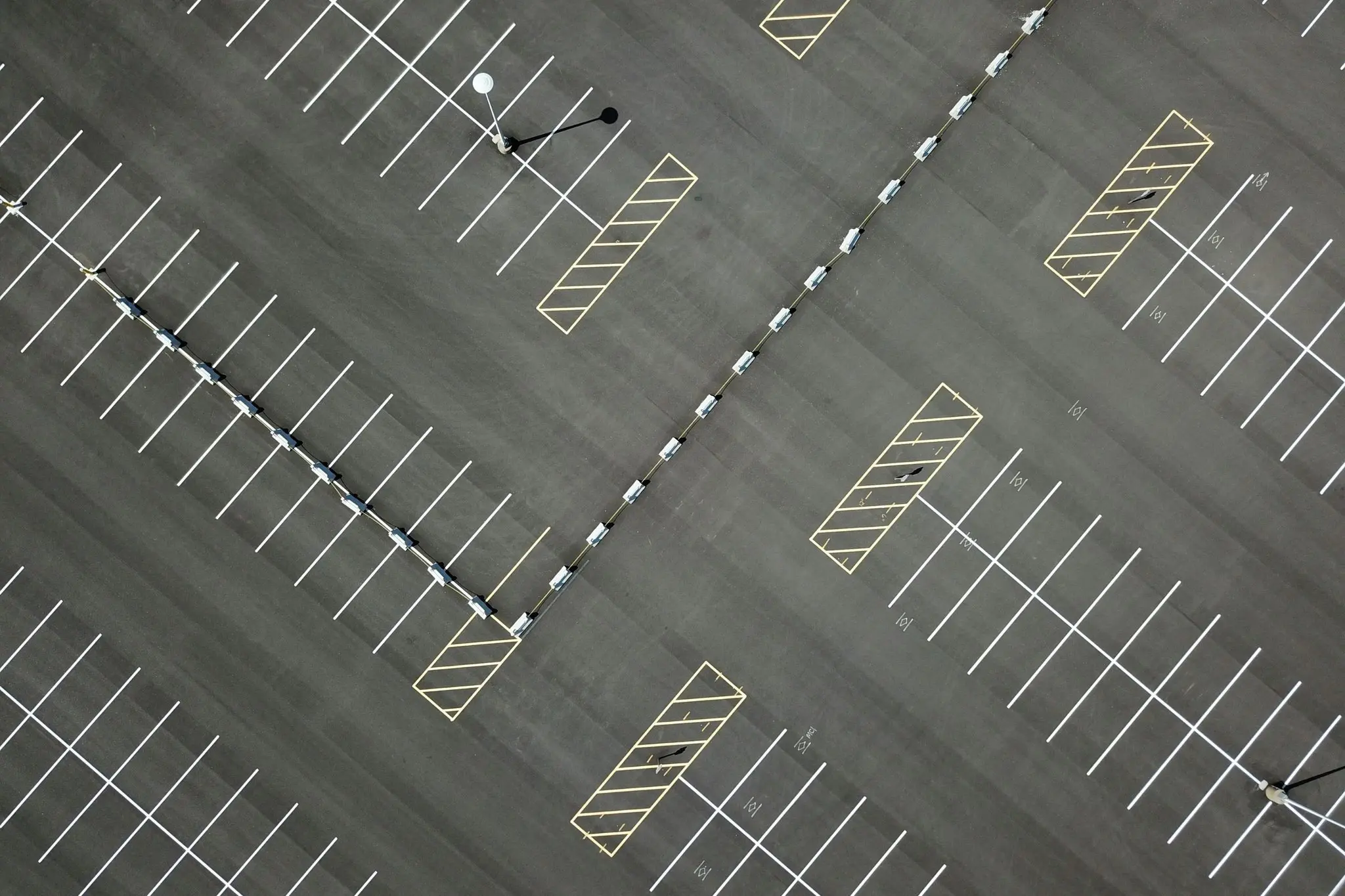
Parking lots and streets
Pavement Marking Removal in Houston, TX
When a lot gets a new layout, old lines have to go, and painting over them never really works. We remove paint and thermoplastic markings from asphalt and concrete so drivers follow the new layout instead of trying to read two.
- Paint and ThermoplasticBoth kinds of markings removed
- Four MethodsMatched to your surface and markings
- Ready to RestripeA clean slate for the new layout
Why remove them
Painting Over Old Lines Doesn't Make Them Disappear
The quick fix is a coat of black paint over the old markings. It looks fine for a while, then traffic and sun wear it down and the old lines start showing through as ghost markings. Now drivers are looking at two layouts at once, and nobody's sure which stall lines or arrows to follow.
Removing the markings properly avoids all of that. It's the right first step any time the layout of a lot changes, whether you're adding spaces, moving the ADA stalls closer to a new entrance or changing how traffic flows through the property.
When property owners call us
- Re-laying out a lot to add spaces or improve traffic flow
- Moving accessible parking to a new entrance
- Reserved or numbered stalls that no longer apply
- Markings put down in the wrong place
- Clearing old lines before a full restripe
How we remove them
Four Ways to Take Markings Off, and How We Choose
The right method depends on the pavement and what the markings are made of. We'll walk you through the options and help you make the best call for your project.
| Method | How it works | Where it fits |
|---|---|---|
| Scarifying | A scarifier is basically a powered scraper. It scores the surface and grinds the paint or thermoplastic off. | Thick or stubborn markings, especially thermoplastic on asphalt. |
| Hot water pressure washing | High-pressure hot water lifts worn paint off the surface without grinding into it. | Paint that's already worn or loose, where you want the gentlest approach. |
| Chemical stripping | A stripper breaks down the paint so it can be washed away. | Paint on concrete and areas where grinding marks would show. |
| Media blasting | Abrasive media is blown at the markings under pressure to wear them off the surface. | Tough markings on concrete when the other methods won't do the job. |
Know what's on your lot
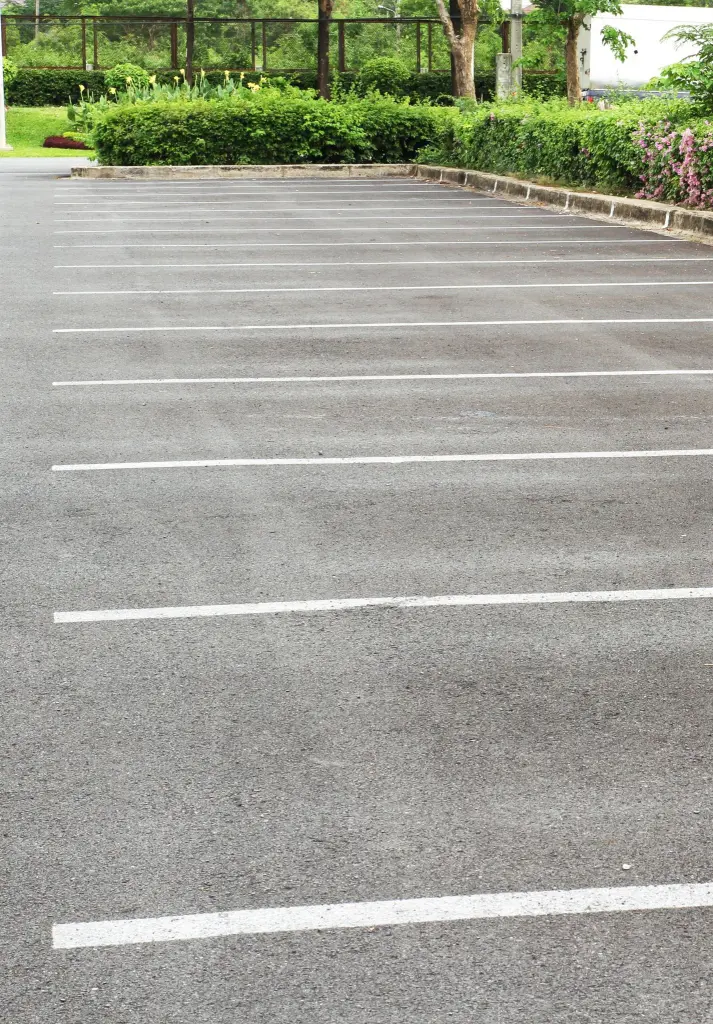
Paint vs. Thermoplastic
Most parking lot lines are traffic paint, a thin coat that wears down over time. It's the easier of the two to remove, and on worn lines it can often come off without much grinding at all.
Thermoplastic is a much thicker material that's melted onto the pavement, the kind often used for crosswalks, stop bars and arrows that need to stand up to heavy traffic. It lasts a long time, which also makes it harder to remove, so it usually calls for scarifying.
Not sure which you have? That's fine. We'll figure it out when we look at the lot, and it's part of how we pick the right method.
Common questions
Marking Removal Questions
Will removing the lines damage my pavement?
Every method leaves some trace on the surface, which is why we choose carefully. We'll explain what to expect for your lot before any work starts, so there are no surprises.
Can you remove markings and restripe in one project?
Yes. The old markings come off, then the new layout goes down with our parking lot striping service, all as one job.
Do you work on streets as well as parking lots?
We remove markings from both parking lots and street pavement. Tell us about the project and we'll talk through what's needed.
Should the lot be sealcoated after the markings come off?
On asphalt, a fresh sealcoat after removal hides the marks the old lines left and gives the new stripes a dark, clean background. It's worth considering if the lot is already faded.

Plan Your New Layout With Us
What's changing on the lot? Tell us, include the new site plan if there is one, and we'll quote the removal and the restripe together.